Welcome to WUXI DAHONG HYDRAULIC PNEUMENT CO.,LTD
WhatsApp: 13665121168 Email: shaominjiao@wxdahong.com


How Does a Hydraulic System Actually Work?
Release Time :
2026-02-24
Hydraulic systems are widely used in industrial machinery, construction equipment, manufacturing lines, and transportation devices. Their core function is to transmit power through pressurized fluid, allowing heavy loads to be moved or controlled with precision and stability. Understanding how a hydraulic system works requires examining its basic principles and main components.
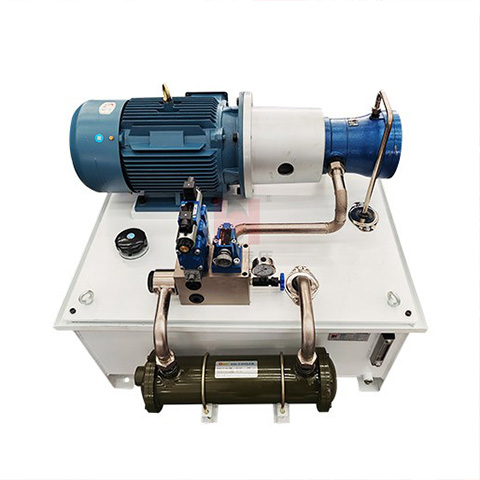
Fundamental Principle: Pascal’s Law
A hydraulic system operates based on Pascal’s Law, which states that pressure applied to a confined fluid is transmitted equally in all directions. When force is applied to a fluid within a sealed system, that force can be multiplied depending on the surface area of the components involved.
In practical terms, a small input force applied to a small piston can generate a much larger output force at a larger piston. This principle allows hydraulic systems to lift, push, or compress heavy loads efficiently.
Main Components of a Hydraulic System
A typical hydraulic system includes several essential parts:
1. Hydraulic Pump
The pump converts mechanical energy into hydraulic energy by moving fluid from the reservoir into the system. It creates flow rather than pressure directly. Pressure develops when the flow encounters resistance.
2. Hydraulic Fluid
The fluid transmits power throughout the system. It also lubricates internal components and helps dissipate heat. The fluid must maintain stable viscosity and chemical properties under working conditions.
3. Control Valves
Valves regulate the direction, pressure, and flow rate of the fluid. Directional control valves determine the movement of actuators, while pressure relief valves protect the system from excessive pressure.
4. Actuators (Cylinders or Motors)
Actuators convert hydraulic energy back into mechanical energy.
Hydraulic cylinders produce linear motion.
Hydraulic motors generate rotary motion.
5. Reservoir
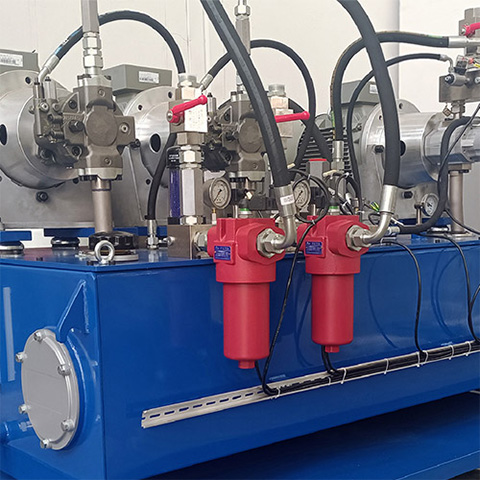
The reservoir stores hydraulic fluid and allows air bubbles and contaminants to separate before recirculation.
Step-by-Step Working Process
The electric motor or engine drives the hydraulic pump.
The pump draws fluid from the reservoir and pushes it into the system.
Control valves direct the pressurized fluid to the appropriate actuator.
The actuator moves, performing mechanical work such as lifting or pressing.
The fluid returns to the reservoir, and the cycle repeats.
Pressure is generated only when the fluid meets resistance, such as when lifting a load. The system continuously balances flow, pressure, and load demands.
Why Hydraulic Systems Are Effective
Hydraulic systems provide high force output in relatively compact assemblies. They allow smooth motion control, adjustable speed, and precise positioning. Because fluids are nearly incompressible, response is consistent under varying loads.
These characteristics make hydraulic technology suitable for applications such as excavators, injection molding machines, presses, and aircraft control systems.
Conclusion
A hydraulic system works by transmitting power through pressurized fluid using the principle of equal pressure distribution. By combining pumps, valves, actuators, and controlled fluid flow, the system converts mechanical energy into controlled motion and force. This straightforward yet powerful mechanism explains why hydraulic systems remain fundamental in modern engineering and industrial operations.
RELATED NEWS
2026-03-31
Why Is Predictive Maintenance Gaining Traction for Hydraulic Systems?
Predictive maintenance is rapidly gaining traction in the management of hydraulic systems due to its ability to reduce unplanned downtime, extend equipment life, and optimize operational efficiency. Hydraulic systems, which rely on pressuri···
2026-03-31
How to Improve the Efficiency of a Hydraulic System?
Improving the efficiency of a hydraulic system is essential for reducing energy consumption, lowering operational costs, and extending the lifespan of equipment. Hydraulic systems are widely used in industries like manufacturing, constructi···
2026-03-24
Why Is Heat Resistance Critical in Metallurgical Electric Furnace Hydraulic Cylinders?
Heat resistance is a critical property for hydraulic cylinders used in metallurgical electric furnaces. These cylinders are key components in controlling furnace doors, tilting mechanisms, and other heavy operations, often operating in envi···
2026-03-24
How Does a Metallurgical Electric Furnace Hydraulic Cylinder Handle High Heat?
In metallurgical processes, electric furnaces operate at extremely high temperatures, often exceeding 1,500°C. Hydraulic cylinders used in these furnaces play a critical role in controlling doors, tilting mechanisms, or other moving parts,···
2026-03-17
How Do Hydraulic Cylinders Improve Safety in Railway Equipment Operations?
Hydraulic cylinders play a crucial role in enhancing safety in railway equipment operations. These devices convert hydraulic energy into linear mechanical force, enabling precise and reliable movement of heavy railway machinery, such as tra···
2026-03-17
How to Maintain Hydraulic Cylinders for Railway Equipment?
Hydraulic cylinders are critical components in railway equipment, enabling smooth movement and heavy lifting in applications such as track maintenance machines, train doors, and suspension systems. Proper maintenance ensures safety, extends···

GET YOUR FREE QUOTE
We will contact you within 24 hours. ( WhatsApp/facebook:13665121168)