Welcome to WUXI DAHONG HYDRAULIC PNEUMENT CO.,LTD
WhatsApp: 13665121168 Email: shaominjiao@wxdahong.com


How does a power lift work?
Release Time :
2025-01-25
Traction, as the name implies, means to pull something closer with force. This physics has been applied to different mechanical purposes. One such example is the rope electric elevator system, also known as the traction elevator system. This system relies mainly on the traction of about 6 to 8 strong mechanical wires that pull the weight of the car, thereby achieving the lift. This drive system is widely adopted because it can reach any height of the building and the speed is certainly faster than that of a steam elevator. The durability of this elevator system speaks for itself.
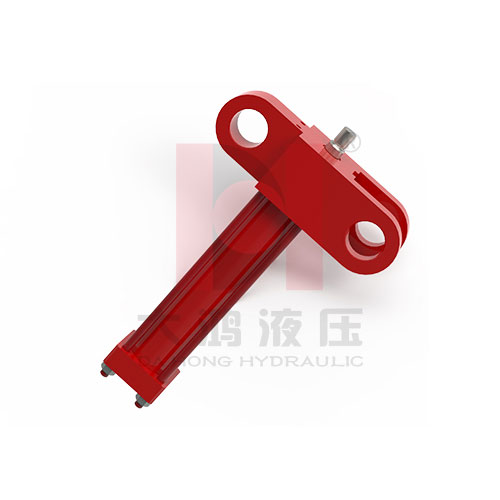
Electric lift
These are usually gearless systems. New buildings are being built every day and traction systems are the preferred choice because their design requires very less maintenance and it is rare that a well-maintained gearless machine needs to be replaced. Apart from this, these elevators have achieved remarkable speeds of more than 500 feet per minute (or 2.5 meters per second).
Gearless traction machines use about six to eight steel wire ropes, which are called hoist ropes or wire ropes, which extend beyond the top of the elevator. The drive pulley winds these wire ropes in special grooves. At the far end on the other side of the wire rope, a counterweight is mounted on the guide rail, which allows for smooth movement. However, in hydraulic systems, we see that the use of pressurized oil is essential to the movement of the elevator. Here, it is the wire rope that moves the car. Since the wire rope is connected to a counterweight at one end and to the cable car at the other end, the combined weight of the elevator car and the counterweight exerts enough pressure on the wire rope to force it into the groove on the drive pulley, creating the required traction as the pulley turns. The counterweight reduces the load on the motor because its weight is calculated to match the weight of the car and half of its passengers. As the car rises, the counterweight drops, balancing the load. This reduces energy consumption because the motor only has to lift the weight of no more than a half-loaded car at any one time. The sheave in this traditional gearless system is very large, ranging from 0.6 to 1.2 meters (2-4 feet) in diameter. The drive sheave is very heavy and large in size, so a powerful electric motor is needed to generate enough power to turn this sheave at 50-200 revolutions per minute to move the elevator at the appropriate speed.
In addition, to ensure safety, a regulating device engages the brakes of the car if the elevator begins to fall. There are other safety checks, such as a strong clamp that stops the cable from moving and activates a safety clamp mounted under the car. The car eventually stops when the movable steel clamp is clamped onto the rails, applying enough force to smoothly stop the car.
RELATED NEWS
2026-03-17
How Do Hydraulic Cylinders Improve Safety in Railway Equipment Operations?
Hydraulic cylinders play a crucial role in enhancing safety in railway equipment operations. These devices convert hydraulic energy into linear mechanical force, enabling precise and reliable movement of heavy railway machinery, such as tra···
2026-03-17
How to Maintain Hydraulic Cylinders for Railway Equipment?
Hydraulic cylinders are critical components in railway equipment, enabling smooth movement and heavy lifting in applications such as track maintenance machines, train doors, and suspension systems. Proper maintenance ensures safety, extends···
2026-03-10
Why Is Precision Critical for the Hydraulic Cylinder of Drilling Jumbo?
Precision is critical for the hydraulic cylinder of a drilling jumbo because it directly affects the machine’s efficiency, safety, and operational lifespan. A drilling jumbo relies on hydraulic cylinders to control the movement of its boom···
2026-03-10
What Causes Leakage in the Hydraulic Cylinder of Drilling Jumbo?
Hydraulic cylinders are critical components in drilling jumbos, providing the force needed for drilling operations in tunnels and mines. However, hydraulic cylinder leakage is a common problem that can reduce efficiency, increase maintenanc···
2026-03-03
How Is Technology Improving Standard Welded High-Pressure Hydraulic Cylinder Performance?
Standard welded high-pressure hydraulic cylinders are essential components in heavy machinery, construction equipment, and industrial automation. Recent technological advancements are significantly enhancing their performance, reliability, ···
2026-03-03
How Durable Is a Standard Welded High-Pressure Hydraulic Cylinder?
A standard welded high-pressure hydraulic cylinder is a critical component in many industrial and mobile applications, providing linear force and motion under demanding conditions. The durability of these cylinders depends on several factor···

GET YOUR FREE QUOTE
We will contact you within 24 hours. ( WhatsApp/facebook:13665121168)