Welcome to WUXI DAHONG HYDRAULIC PNEUMENT CO.,LTD
WhatsApp: 13665121168 Email: shaominjiao@wxdahong.com


What are the 4 basic principles of hydraulics?
Release Time :
2025-02-05
Principle 1
For a hydraulic system to operate efficiently, a continuous flow of fluid must be maintained. The continuity equation states that the fluid flow rate remains constant throughout the system, which means that the product of the cross-sectional area and the flow rate at any point is constant. In other words, if the area becomes narrower, the fluid viscosity increases, and vice versa.
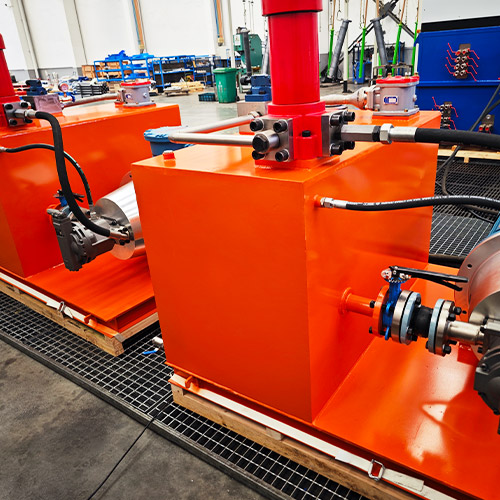
Optimal flow is achieved by creating a closed-loop configuration connected to core components such as pumps and valves. The pump is actually the heart of the system, ensuring that the fluid flows as required to complete the intended work. Meanwhile, the valve enables precise direction and flow control for targeted performance.
Best practices for optimizing fluid flow in hydraulic systems include:
Specifying correctly sized and rated hoses, pipes, and valves.
Avoid sharp bends and unnecessary changes in flow direction.
Monitor and control flow rates throughout the system to avoid cavitation.
Principle 2
Pressure and flow control, or energy balance, are essential elements in hydraulic system design to maximize efficiency and safety. The flow and pressure of a system directly affect its ability to maintain the required speed or force level when a load is applied. Bernoulli's principle states that as a fluid flows through a system, an energy exchange occurs between its kinetic, potential and pressure energies.
Pressure and flow are regulated by pressure relief valves and flow control valves to prevent over-pressurization of the system and to regulate the velocity of the hydraulic fluid to ensure steady and controlled motion.
Best practices for maintaining energy balance in hydraulic systems:
Optimize pump and motor selection to meet the power requirements of your application.
Use accumulators of the correct size and configuration to store energy.
Incorporate energy recovery technologies such as regenerative circuits.
Principle Three
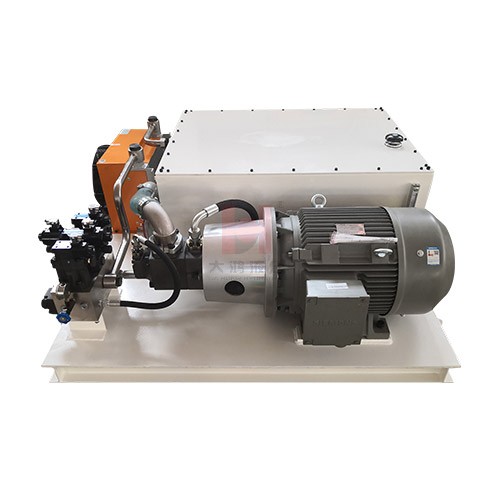
Selecting the right fluid is critical to efficient power transmission and system performance. To achieve overall system efficiency, the selected fluid must have the appropriate viscosity, optimal temperature performance, and resistance to chemical degradation and wear. Regular maintenance and fluid replacement is essential to ensure reliable hydraulic operation - this may involve scheduled oil changes, fluid analysis and filtration programs to minimize the risk of contamination.
Best practices include:
Selecting a fluid type that is compatible with your system materials and optimized for the specific application and operating conditions.
Implement a fluid testing and monitoring program to keep contamination levels within acceptable limits for the application.
RELATED NEWS
2026-03-31
Why Is Predictive Maintenance Gaining Traction for Hydraulic Systems?
Predictive maintenance is rapidly gaining traction in the management of hydraulic systems due to its ability to reduce unplanned downtime, extend equipment life, and optimize operational efficiency. Hydraulic systems, which rely on pressuri···
2026-03-31
How to Improve the Efficiency of a Hydraulic System?
Improving the efficiency of a hydraulic system is essential for reducing energy consumption, lowering operational costs, and extending the lifespan of equipment. Hydraulic systems are widely used in industries like manufacturing, constructi···
2026-03-24
Why Is Heat Resistance Critical in Metallurgical Electric Furnace Hydraulic Cylinders?
Heat resistance is a critical property for hydraulic cylinders used in metallurgical electric furnaces. These cylinders are key components in controlling furnace doors, tilting mechanisms, and other heavy operations, often operating in envi···
2026-03-24
How Does a Metallurgical Electric Furnace Hydraulic Cylinder Handle High Heat?
In metallurgical processes, electric furnaces operate at extremely high temperatures, often exceeding 1,500°C. Hydraulic cylinders used in these furnaces play a critical role in controlling doors, tilting mechanisms, or other moving parts,···
2026-03-17
How Do Hydraulic Cylinders Improve Safety in Railway Equipment Operations?
Hydraulic cylinders play a crucial role in enhancing safety in railway equipment operations. These devices convert hydraulic energy into linear mechanical force, enabling precise and reliable movement of heavy railway machinery, such as tra···
2026-03-17
How to Maintain Hydraulic Cylinders for Railway Equipment?
Hydraulic cylinders are critical components in railway equipment, enabling smooth movement and heavy lifting in applications such as track maintenance machines, train doors, and suspension systems. Proper maintenance ensures safety, extends···

GET YOUR FREE QUOTE
We will contact you within 24 hours. ( WhatsApp/facebook:13665121168)