Welcome to WUXI DAHONG HYDRAULIC PNEUMENT CO.,LTD
WhatsApp: 13665121168 Email: shaominjiao@wxdahong.com


What are the different types of hydraulic lifts?
Release Time :
2025-01-25
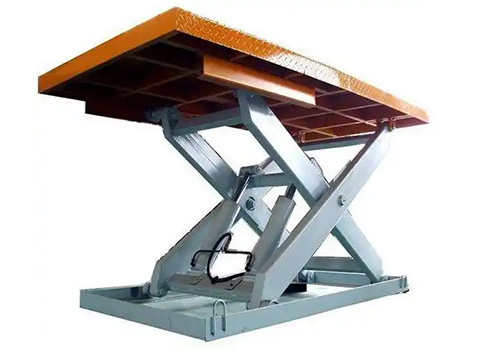
1. Hydraulic Scissor Lift
A hydraulic scissor lift stands out for its crisscross structure. This design enables it to move vertically up and down. It is ideal for tasks that require a stable platform. These lifts are common in manufacturing and auto repair shops. They make work easier and safer.
2. Hydraulic Cargo Lift
This lift is used to move cargo between floors. It is strong and durable and can handle a lot of weight. Warehouses and large retail stores often use them. They simplify the inventory movement process. This makes operations more efficient.
3. Hydraulic Boom Lift
A hydraulic boom lift is unique. Its arms can extend in different directions. This flexibility is perfect for reaching high places. It is a favorite in the construction and utility sectors. Safety and accessibility are its main benefits.
4. Hydraulic Lift Platform
This lift is essential for loading and unloading docks. It bridges the gap between different heights. Trucks and warehouses find it indispensable. It simplifies the loading and unloading process. This lift is a key player in logistics.
5. Hydraulic Car Lift
Garages use hydraulic car lifts for vehicle repairs. They allow mechanics to work safely under cars. These lifts are sturdy and reliable. They bring convenience and safety to car repairs.
6. Forklifts
Forklifts are used to transport materials at construction sites, warehouses, and factories, as well as to load and unload trucks and airplanes. Forklifts are designed to efficiently move items from one place to another.
7. Medical Lifts
Medical lifts are used to adjust operating tables, hospital beds, and monitoring equipment. Hospital beds equipped with hydraulic systems facilitate the transportation of patients from room to treatment area, allowing staff to easily adjust the height of the bed for accessibility and comfort.
10. Hand Pump Lifts
Hand pump lifts are operated using a manual hydraulic hand pump and are equipped with a release lever to lower the load. They are extremely durable, require little maintenance, and can lift objects weighing up to one ton to heights of more than six feet.
11. Custom Hydraulic Lifts
Recognizing that each industrial application is unique and requires tailored engineering, hydraulic lift manufacturers offer custom-designed lifts to meet specialized, unconventional, and innovative requirements. Every aspect of a hydraulic lift can be engineered, redesigned, and configured to suit specific conditions or environments. Adjustable factors include:
Frame size
Lift travel and speed
Safety features, such as explosion-proof materials and locking rods
Custom materials, such as laminate, anti-static lining and stainless steel
Multi-axis rotation
Adding various forms of height adjustment
Other components include forks, clamps, shelves, tables and seats
12. Vertical Reciprocating Conveyor (VRC)
Vertical reciprocating conveyors (VRCs), also known as vertical material lifts, freight lifts and conveyor lifts, are classified by the American Society of Mechanical Engineers (ASME) as conveyors and related equipment in accordance with the ASME B20.1 standard. VRCs are designed for moving materials, not people. They can be installed in various locations inside and outside buildings to efficiently transport materials of various shapes, sizes and weights between floors, mezzanines, balconies, basements and different floors of multi-story buildings.
VRCs offer more placement options than elevators and do not require a separate machine room or pits several feet deep, saving space. They feature structural support and an enclosed cabin to prevent the load from falling, providing a safer, more efficient alternative to forklifts or scissor lifts.
VRCs’ main components include guide posts, carriages, and hydraulic actuators. VRCs can be either mechanical or hydraulic, with hydraulic VRCs able to lift loads from 3,000 to 6,000 pounds. Hydraulic VRCs are more expensive to install than mechanical VRCs and are ideal for applications involving two levels and heights up to 25 feet that do not require continuous cycling.
Configurations
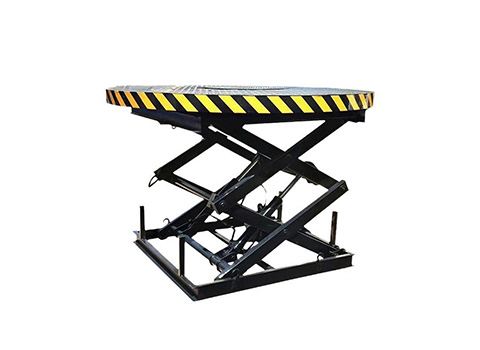
Straddle - The carriage is located between the guide posts. Force is applied vertically along the length of the beam.
Cantilever - The carriage is located in front of the guide posts and is accessible from three sides.
RELATED NEWS
2026-03-31
Why Is Predictive Maintenance Gaining Traction for Hydraulic Systems?
Predictive maintenance is rapidly gaining traction in the management of hydraulic systems due to its ability to reduce unplanned downtime, extend equipment life, and optimize operational efficiency. Hydraulic systems, which rely on pressuri···
2026-03-31
How to Improve the Efficiency of a Hydraulic System?
Improving the efficiency of a hydraulic system is essential for reducing energy consumption, lowering operational costs, and extending the lifespan of equipment. Hydraulic systems are widely used in industries like manufacturing, constructi···
2026-03-24
Why Is Heat Resistance Critical in Metallurgical Electric Furnace Hydraulic Cylinders?
Heat resistance is a critical property for hydraulic cylinders used in metallurgical electric furnaces. These cylinders are key components in controlling furnace doors, tilting mechanisms, and other heavy operations, often operating in envi···
2026-03-24
How Does a Metallurgical Electric Furnace Hydraulic Cylinder Handle High Heat?
In metallurgical processes, electric furnaces operate at extremely high temperatures, often exceeding 1,500°C. Hydraulic cylinders used in these furnaces play a critical role in controlling doors, tilting mechanisms, or other moving parts,···
2026-03-17
How Do Hydraulic Cylinders Improve Safety in Railway Equipment Operations?
Hydraulic cylinders play a crucial role in enhancing safety in railway equipment operations. These devices convert hydraulic energy into linear mechanical force, enabling precise and reliable movement of heavy railway machinery, such as tra···
2026-03-17
How to Maintain Hydraulic Cylinders for Railway Equipment?
Hydraulic cylinders are critical components in railway equipment, enabling smooth movement and heavy lifting in applications such as track maintenance machines, train doors, and suspension systems. Proper maintenance ensures safety, extends···

GET YOUR FREE QUOTE
We will contact you within 24 hours. ( WhatsApp/facebook:13665121168)