Welcome to WUXI DAHONG HYDRAULIC PNEUMENT CO.,LTD
WhatsApp: 13665121168 Email: shaominjiao@wxdahong.com


What Is Driving the Demand for Two in One Hydraulic Stations?
Release Time :
2026-02-03
Two in one hydraulic stations, also known as integrated hydraulic power units, combine two independent hydraulic circuits within a single assembly. This structural integration allows one system to drive multiple actuators or separate functions while maintaining compact installation requirements. In recent years, demand for these systems has increased across manufacturing, logistics, construction machinery, and automated production lines. Several technical and market factors are contributing to this trend.
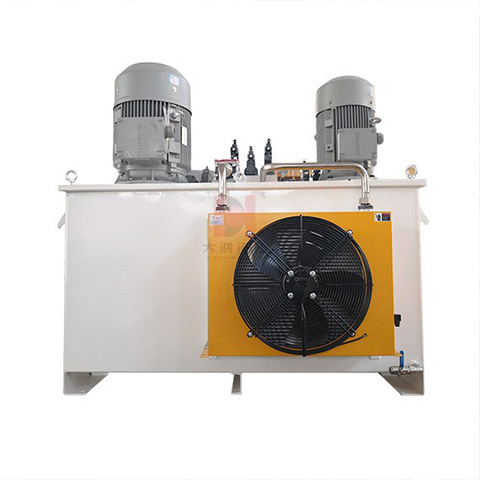
Equipment Integration and Space Optimization
Modern industrial equipment is increasingly designed with compact layouts. Production lines, mobile machinery, and modular workstations often require multiple hydraulic functions within limited installation space. A two in one hydraulic station reduces the need for separate power units, external piping, and duplicated components. By integrating pumps, valves, reservoirs, and control modules into one enclosure, manufacturers can simplify system architecture and reduce footprint.
This integration also shortens hydraulic piping routes, which can improve pressure stability and reduce potential leakage points.
Multi-Function Operation Requirements
Industrial machinery frequently performs multiple tasks that require independent hydraulic control. For example, clamping and lifting mechanisms may need separate pressure settings and flow rates. A two in one hydraulic station enables dual circuits with independent control logic. Each circuit can operate simultaneously or sequentially without interference.
This flexibility supports complex motion control in automated systems, particularly in robotics-assisted assembly, metal forming, and material handling equipment.
Improved Energy Management
Traditional hydraulic setups often rely on multiple standalone power units running continuously. Two in one configurations allow shared reservoirs and optimized pump selection. Depending on system design, variable displacement pumps or load-sensing controls can allocate flow based on real-time demand. This helps reduce unnecessary energy consumption and mechanical wear.
In applications with intermittent duty cycles, dual-circuit integration can also allow staged operation, improving overall power utilization.
Simplified Maintenance and Installation
Maintenance teams benefit from centralized hydraulic components. A unified station simplifies inspection routines, filter replacement, and oil management. Fewer external connections reduce the risk of contamination and installation errors.
For equipment manufacturers, pre-assembled two in one hydraulic stations shorten assembly time and reduce commissioning complexity. Factory-tested modules can be installed as standardized units, improving consistency across product lines.
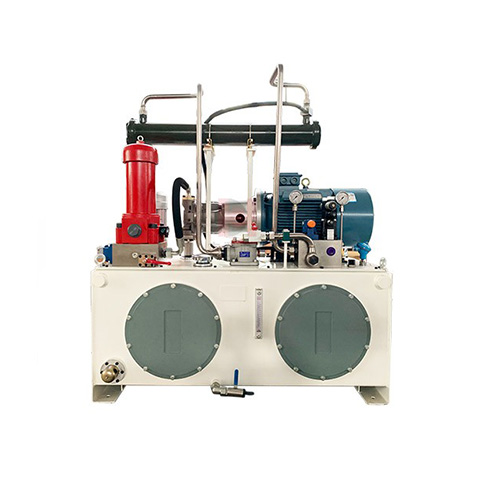
Growth in Automation and Custom Equipment
The expansion of automated manufacturing and custom-built machinery has increased the need for adaptable hydraulic solutions. Two in one hydraulic stations provide system designers with a modular approach. Instead of installing separate hydraulic packages for each function, engineers can configure dual circuits within a single platform tailored to specific operational requirements.
As industrial systems continue to prioritize compact structure, operational flexibility, and streamlined maintenance, the demand for integrated dual-circuit hydraulic stations is expected to remain steady. Their ability to combine performance and structural efficiency makes them a practical solution for evolving equipment design standards.
RELATED NEWS
2026-03-31
Why Is Predictive Maintenance Gaining Traction for Hydraulic Systems?
Predictive maintenance is rapidly gaining traction in the management of hydraulic systems due to its ability to reduce unplanned downtime, extend equipment life, and optimize operational efficiency. Hydraulic systems, which rely on pressuri···
2026-03-31
How to Improve the Efficiency of a Hydraulic System?
Improving the efficiency of a hydraulic system is essential for reducing energy consumption, lowering operational costs, and extending the lifespan of equipment. Hydraulic systems are widely used in industries like manufacturing, constructi···
2026-03-24
Why Is Heat Resistance Critical in Metallurgical Electric Furnace Hydraulic Cylinders?
Heat resistance is a critical property for hydraulic cylinders used in metallurgical electric furnaces. These cylinders are key components in controlling furnace doors, tilting mechanisms, and other heavy operations, often operating in envi···
2026-03-24
How Does a Metallurgical Electric Furnace Hydraulic Cylinder Handle High Heat?
In metallurgical processes, electric furnaces operate at extremely high temperatures, often exceeding 1,500°C. Hydraulic cylinders used in these furnaces play a critical role in controlling doors, tilting mechanisms, or other moving parts,···
2026-03-17
How Do Hydraulic Cylinders Improve Safety in Railway Equipment Operations?
Hydraulic cylinders play a crucial role in enhancing safety in railway equipment operations. These devices convert hydraulic energy into linear mechanical force, enabling precise and reliable movement of heavy railway machinery, such as tra···
2026-03-17
How to Maintain Hydraulic Cylinders for Railway Equipment?
Hydraulic cylinders are critical components in railway equipment, enabling smooth movement and heavy lifting in applications such as track maintenance machines, train doors, and suspension systems. Proper maintenance ensures safety, extends···

GET YOUR FREE QUOTE
We will contact you within 24 hours. ( WhatsApp/facebook:13665121168)