Welcome to WUXI DAHONG HYDRAULIC PNEUMENT CO.,LTD
WhatsApp: 13665121168 Email: shaominjiao@wxdahong.com

What is the most common hydraulic fitting?
Release Time :
2025-02-11
The most common hydraulic fitting styles are O-ring, butt angle, and tapered threads. These three fittings have different variations for different applications.
O-ring fittings
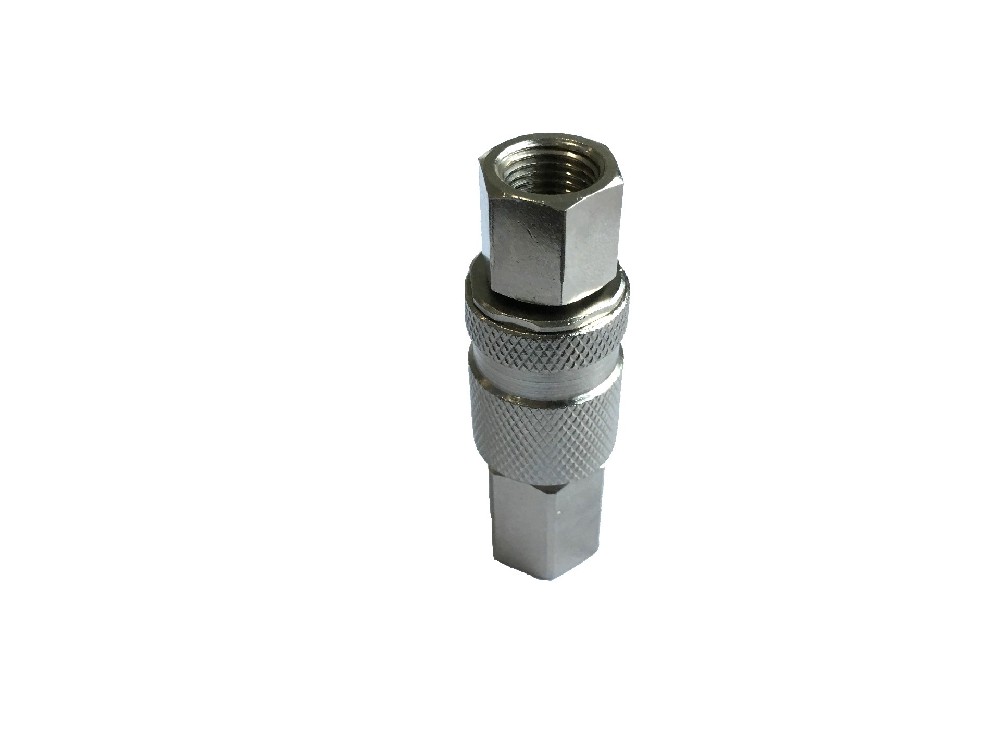
There are three types of O-ring fitting designs: O-ring boss, O-ring face seal, and O-ring flange. As one might imagine, each fitting has an O-ring to create a seal. Hydraulic fitting types
O-ring boss (ORB) fittings: The O-ring is located between the threads and the wrench flats around the outside diameter of the male threaded end of the fitting. It rests against the internal port and provides a very reliable, leak-proof seal. O-ring boss fittings are either adjustable or non-adjustable.
Adjustable O-ring fittings are typically elbows or tees that are installed in a fixed orientation and use a backup washer that forces the O-ring into the cavity when the lock nut is tightened. They are considered adjustable because they align with the mating piece before tightening.
Non-adjustable O-ring fittings are plugs and straight connectors that plug directly into the port without alignment. ORB
Fittings are highly favored in many applications because they provide the best seal in medium and high pressure systems, as recommended by the National Fire Protection Association (NFPA).
O-ring face seal (ORFS) fittings have an O-ring located on the face of the fitting to create a seal between two connected metal surfaces. When the connection is tightened, the O-ring presses against the flat surface of the mating fitting, tubing, or other mating female port. While ORFS fittings most commonly use 90 durometer nitrile O-rings, many other compounds are used, such as fluorocarbons or other materials in high temperature environments, depending on the application.
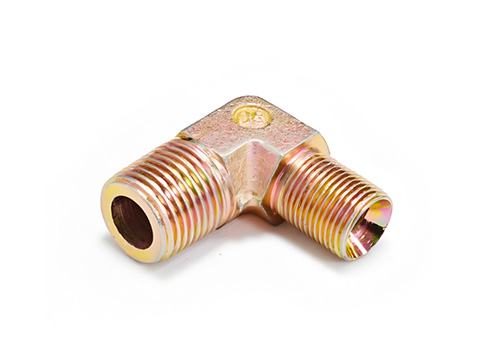
As design engineers increase system pressures, which results in increased vibration, O-ring face seals are becoming more popular for their resistance to these high vibration applications.
RELATED NEWS
2026-03-31
Why Is Predictive Maintenance Gaining Traction for Hydraulic Systems?
Predictive maintenance is rapidly gaining traction in the management of hydraulic systems due to its ability to reduce unplanned downtime, extend equipment life, and optimize operational efficiency. Hydraulic systems, which rely on pressuri···
2026-03-31
How to Improve the Efficiency of a Hydraulic System?
Improving the efficiency of a hydraulic system is essential for reducing energy consumption, lowering operational costs, and extending the lifespan of equipment. Hydraulic systems are widely used in industries like manufacturing, constructi···
2026-03-24
Why Is Heat Resistance Critical in Metallurgical Electric Furnace Hydraulic Cylinders?
Heat resistance is a critical property for hydraulic cylinders used in metallurgical electric furnaces. These cylinders are key components in controlling furnace doors, tilting mechanisms, and other heavy operations, often operating in envi···
2026-03-24
How Does a Metallurgical Electric Furnace Hydraulic Cylinder Handle High Heat?
In metallurgical processes, electric furnaces operate at extremely high temperatures, often exceeding 1,500°C. Hydraulic cylinders used in these furnaces play a critical role in controlling doors, tilting mechanisms, or other moving parts,···
2026-03-17
How Do Hydraulic Cylinders Improve Safety in Railway Equipment Operations?
Hydraulic cylinders play a crucial role in enhancing safety in railway equipment operations. These devices convert hydraulic energy into linear mechanical force, enabling precise and reliable movement of heavy railway machinery, such as tra···
2026-03-17
How to Maintain Hydraulic Cylinders for Railway Equipment?
Hydraulic cylinders are critical components in railway equipment, enabling smooth movement and heavy lifting in applications such as track maintenance machines, train doors, and suspension systems. Proper maintenance ensures safety, extends···

GET YOUR FREE QUOTE
We will contact you within 24 hours. ( WhatsApp/facebook:13665121168)