Welcome to WUXI DAHONG HYDRAULIC PNEUMENT CO.,LTD
WhatsApp: 13665121168 Email: shaominjiao@wxdahong.com


How Does a Two in One Hydraulic Station Save Floor Space?
Release Time :
2026-02-03
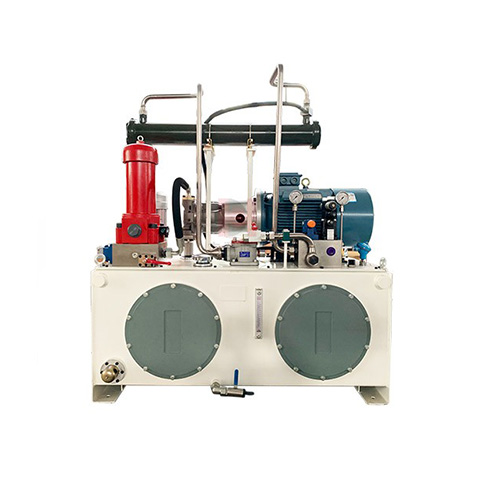
In modern manufacturing environments, floor space is directly linked to production efficiency and operating costs. Equipment layout must balance functionality, safety, and accessibility. A two in one hydraulic station addresses these requirements by integrating multiple hydraulic functions into a single compact system.
Integrated Structural Design
A traditional hydraulic setup often requires separate power units, control cabinets, oil tanks, and cooling modules. Each component occupies independent space and requires additional piping and wiring. A two in one hydraulic station consolidates these elements into one structural frame.
By combining dual hydraulic circuits or two independent control systems within a shared housing, the station reduces the need for duplicate reservoirs, motors, and mounting bases. This integrated architecture minimizes the total footprint while maintaining operational capacity.
Shared Core Components
In many applications, two hydraulic systems operate alternately or under different load conditions. Instead of installing two standalone power units, a two in one configuration allows shared use of core components such as:
Hydraulic oil tan
Electric motor
Integrated
Pump assembly
Cooling unit
Through optimized internal channel design and valve group arrangement, the system distributes flow and pressure where required. Sharing these components eliminates redundant equipment and frees up valuable production area.
Compact Layout Optimization
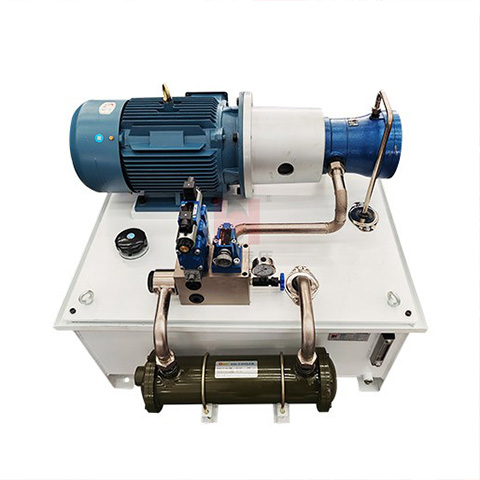
Two in one hydraulic stations are typically designed with modular stacking or vertical arrangement. Pumps, manifolds, and control valves are positioned to reduce horizontal spread. Electrical control elements are often mounted directly above or beside the hydraulic block, further compressing installation space.
This compact layout is particularly useful in facilities with limited floor area or where machines are placed close together. Reduced footprint allows easier integration into automated lines and improves overall workshop planning.
Reduced Piping and Installation Area
Separate hydraulic stations require individual pipelines routed across the shop floor. A two in one system centralizes output ports, decreasing external piping length. Fewer pipelines mean less routing space, fewer mounting brackets, and simplified installation.
Shorter hydraulic lines also improve pressure response stability and reduce potential leakage points, contributing to cleaner and more organized equipment zones.
Improved Equipment Arrangement Flexibility
With fewer standalone units, engineers gain greater flexibility in machine positioning. The compact hydraulic station can be installed closer to the driven equipment or even beneath structural platforms. This helps optimize workflow paths and maintain clear access aisles for operators and maintenance personnel.
Conclusion
A two in one hydraulic station saves floor space by integrating dual hydraulic functions into a single compact structure, sharing core components, reducing piping requirements, and enabling more efficient layout planning. For manufacturers seeking to optimize workshop utilization without sacrificing performance, this integrated hydraulic solution provides a practical and space-efficient option.
RELATED NEWS
2026-03-31
Why Is Predictive Maintenance Gaining Traction for Hydraulic Systems?
Predictive maintenance is rapidly gaining traction in the management of hydraulic systems due to its ability to reduce unplanned downtime, extend equipment life, and optimize operational efficiency. Hydraulic systems, which rely on pressuri···
2026-03-31
How to Improve the Efficiency of a Hydraulic System?
Improving the efficiency of a hydraulic system is essential for reducing energy consumption, lowering operational costs, and extending the lifespan of equipment. Hydraulic systems are widely used in industries like manufacturing, constructi···
2026-03-24
Why Is Heat Resistance Critical in Metallurgical Electric Furnace Hydraulic Cylinders?
Heat resistance is a critical property for hydraulic cylinders used in metallurgical electric furnaces. These cylinders are key components in controlling furnace doors, tilting mechanisms, and other heavy operations, often operating in envi···
2026-03-24
How Does a Metallurgical Electric Furnace Hydraulic Cylinder Handle High Heat?
In metallurgical processes, electric furnaces operate at extremely high temperatures, often exceeding 1,500°C. Hydraulic cylinders used in these furnaces play a critical role in controlling doors, tilting mechanisms, or other moving parts,···
2026-03-17
How Do Hydraulic Cylinders Improve Safety in Railway Equipment Operations?
Hydraulic cylinders play a crucial role in enhancing safety in railway equipment operations. These devices convert hydraulic energy into linear mechanical force, enabling precise and reliable movement of heavy railway machinery, such as tra···
2026-03-17
How to Maintain Hydraulic Cylinders for Railway Equipment?
Hydraulic cylinders are critical components in railway equipment, enabling smooth movement and heavy lifting in applications such as track maintenance machines, train doors, and suspension systems. Proper maintenance ensures safety, extends···

GET YOUR FREE QUOTE
We will contact you within 24 hours. ( WhatsApp/facebook:13665121168)