Welcome to WUXI DAHONG HYDRAULIC PNEUMENT CO.,LTD
WhatsApp: 13665121168 Email: shaominjiao@wxdahong.com


What are the 3 most common types of hydraulic motors?
Release Time :
2025-02-11
The main function of a hydraulic motor is to convert hydraulic energy into mechanical energy. There are three main types of hydraulic motors: gear motors, piston motors, and vane motors.
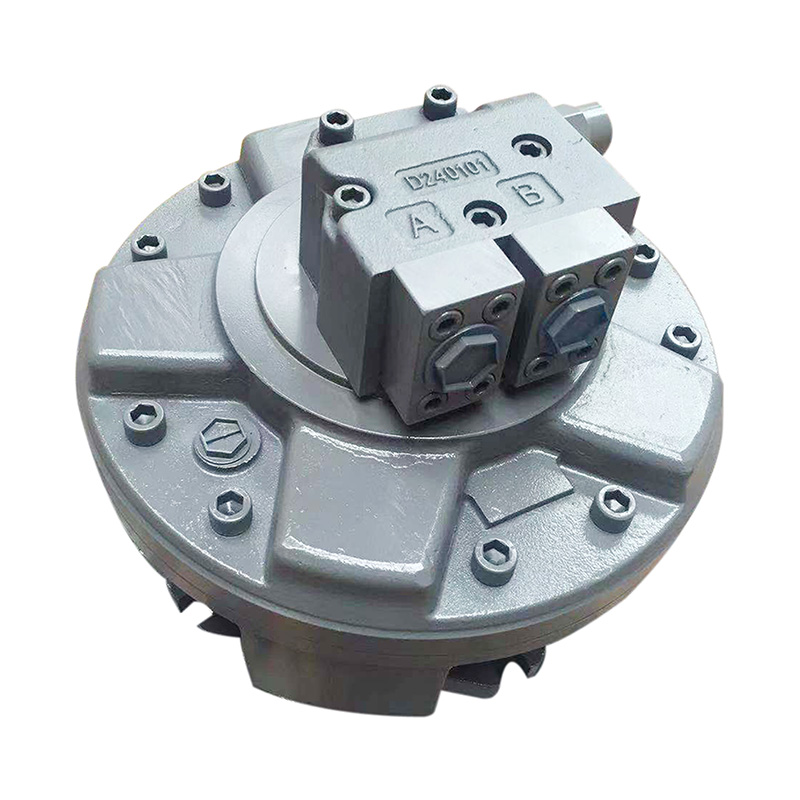
1. Gear Motors
Gear motors are known for their simple design and reliability. They are often used in applications that require constant torque and speed. These motors operate by converting hydraulic energy into mechanical energy using gear meshing. There are two main types of gear motors: external gear motors and internal gear motors.
External gear motors: In this type of motor, two gears are placed side by side in a housing. When hydraulic fluid enters the motor, it causes the gears to rotate, which creates mechanical energy. External gear motors are favored for their simplicity and cost-effectiveness. They are often used in construction machinery, agricultural equipment, and industrial applications.
Internal gear motors: These motors feature one gear inside another, with a smaller gear (often called a "pinion") rotating inside the larger gear. Internal gear motors are smoother to operate and are often used in applications that require low noise and steady output, such as material handling equipment.
The main advantages of gear motors include durability, simple maintenance, and a wide range of operating speeds. However, they are generally less efficient than piston motors, especially at high pressures.
2. Piston Motors
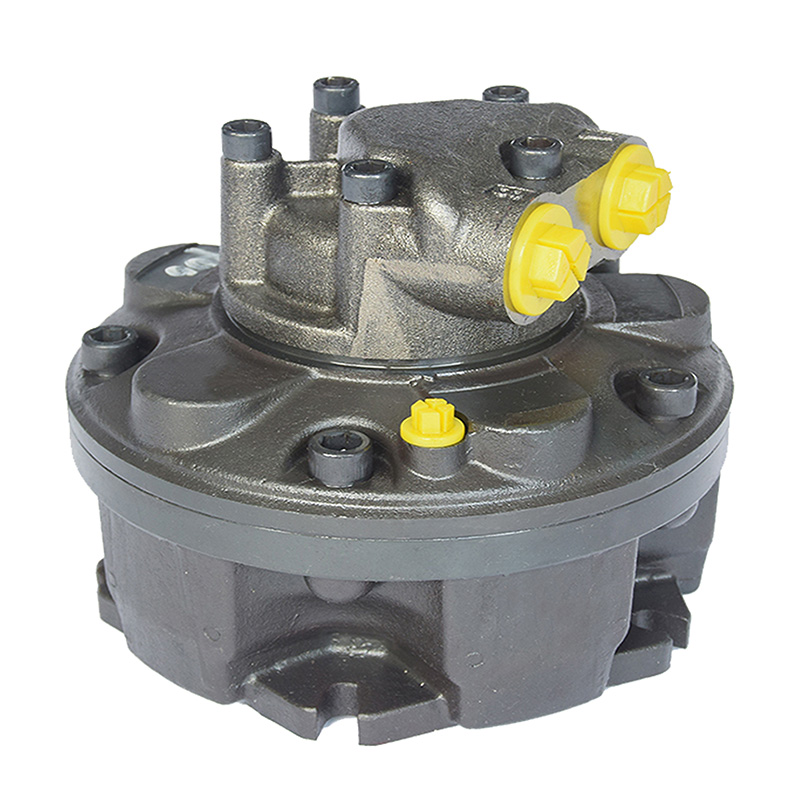
Piston motors are highly efficient and can handle higher pressures, making them ideal for demanding applications. These motors use hydraulic pressure to push a piston to create a rotary motion. Piston motors are further divided into axial piston motors and radial piston motors.
Axial Piston Motors: These motors have pistons arranged in a cylinder block, parallel to the motor's axis of rotation. When hydraulic fluid enters the motor, it pushes the piston, which causes the cylinder block to rotate. Axial piston motors are known for their efficiency and ability to operate at high pressures (up to 450 bar). They are often used in heavy machinery such as excavators, cranes, and industrial presses.
Radial Piston Motors: In this type of motor, the pistons are arranged perpendicular to the shaft, similar to the spokes of a wheel. When hydraulic fluid flows into the motor, it pushes the pistons outward, causing the motor to rotate. Radial piston motors offer higher torque at low speeds, making them ideal for applications such as winches, cranes, and drilling equipment. They are also commonly used in off-road vehicles and marine applications.
The main advantages of piston motors are their efficiency, durability, and ability to operate at high pressures. However, piston motors tend to be more expensive and complex than gear motors.
3. Vane Motors
Vane motors operate using a series of vanes that slide in and out of slots in a spinning rotor. When hydraulic fluid flows into the motor, it pushes on the vanes, causing the rotor to spin. Vane motors are known for their smooth operation and are often used in applications where low noise and constant speed are critical, such as injection molding machines, industrial conveyors, and machine tools.
Vane motors offer a variety of advantages, including smooth and quiet operation, high efficiency, and compact design. But they are generally less rugged than piston motors and are better suited to low-pressure applications.
Choosing the Right Hydraulic Motor
The first step in choosing the right type of hydraulic motor is to understand the application for the motor. Knowing this means you understand the performance needs, including temperature, speed, pressure, and operating torque.
You should also consider whether you need a motor that is easy to install or if your industry sets any specification requirements. It's also a good idea to check for the possibility of contamination.
RELATED NEWS
2026-03-31
Why Is Predictive Maintenance Gaining Traction for Hydraulic Systems?
Predictive maintenance is rapidly gaining traction in the management of hydraulic systems due to its ability to reduce unplanned downtime, extend equipment life, and optimize operational efficiency. Hydraulic systems, which rely on pressuri···
2026-03-31
How to Improve the Efficiency of a Hydraulic System?
Improving the efficiency of a hydraulic system is essential for reducing energy consumption, lowering operational costs, and extending the lifespan of equipment. Hydraulic systems are widely used in industries like manufacturing, constructi···
2026-03-24
Why Is Heat Resistance Critical in Metallurgical Electric Furnace Hydraulic Cylinders?
Heat resistance is a critical property for hydraulic cylinders used in metallurgical electric furnaces. These cylinders are key components in controlling furnace doors, tilting mechanisms, and other heavy operations, often operating in envi···
2026-03-24
How Does a Metallurgical Electric Furnace Hydraulic Cylinder Handle High Heat?
In metallurgical processes, electric furnaces operate at extremely high temperatures, often exceeding 1,500°C. Hydraulic cylinders used in these furnaces play a critical role in controlling doors, tilting mechanisms, or other moving parts,···
2026-03-17
How Do Hydraulic Cylinders Improve Safety in Railway Equipment Operations?
Hydraulic cylinders play a crucial role in enhancing safety in railway equipment operations. These devices convert hydraulic energy into linear mechanical force, enabling precise and reliable movement of heavy railway machinery, such as tra···
2026-03-17
How to Maintain Hydraulic Cylinders for Railway Equipment?
Hydraulic cylinders are critical components in railway equipment, enabling smooth movement and heavy lifting in applications such as track maintenance machines, train doors, and suspension systems. Proper maintenance ensures safety, extends···

GET YOUR FREE QUOTE
We will contact you within 24 hours. ( WhatsApp/facebook:13665121168)