Welcome to WUXI DAHONG HYDRAULIC PNEUMENT CO.,LTD
WhatsApp: 13665121168 Email: shaominjiao@wxdahong.com


How Is Eco-Friendly Hydraulic Technology Changing Box Handling?
Release Time :
2026-02-10
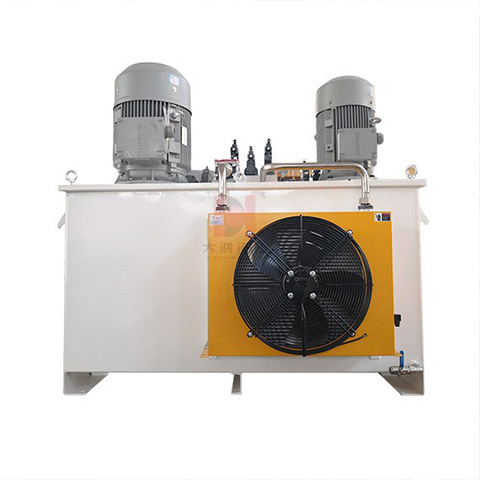
Hydraulic systems play a central role in automated box handling across logistics centers, manufacturing plants, and distribution warehouses. As operational standards continue to rise, equipment manufacturers are refining hydraulic technology to improve efficiency, reliability, and lifecycle cost control. Recent developments in environmentally considerate hydraulic design are reshaping how box handling systems are engineered and maintained.
1. Improved Energy Utilization in Hydraulic Drives
Modern box handling equipment—such as lift tables, pallet stackers, and conveyor transfer units—relies on precise hydraulic actuation. Advances in variable displacement pumps and load-sensing control systems allow hydraulic output to match real-time demand.
Instead of running continuously at full capacity, the system adjusts pressure and flow dynamically. This reduces unnecessary energy draw, lowers operating temperature, and minimizes mechanical stress on components. As a result, facilities benefit from smoother box positioning and more stable cycle times.
2. Reduced Fluid Leakage and Maintenance Downtime
In high-throughput box handling environments, hydraulic leakage can lead to production interruptions and increased service intervals. Updated sealing technologies, improved hose assemblies, and precision-machined valve blocks help limit leakage risks.
Additionally, integrated monitoring sensors now track pressure fluctuations, oil temperature, and flow rate. Predictive maintenance strategies based on these data points allow operators to address issues before they affect conveyor alignment or lifting accuracy.
3. Compact System Design for Space Optimization
Warehouse layouts are becoming denser, and box handling equipment must adapt. Modern hydraulic power units are designed with compact manifolds and modular configurations. This allows easier integration into automated storage and retrieval systems (AS/RS) and robotic sorting lines.
Compact hydraulic solutions also reduce overall machine footprint while maintaining sufficient lifting force for heavy cartons or palletized goods. This balance between size and output enhances layout flexibility.
4. Noise Reduction and Workplace Conditions
Hydraulic noise has traditionally been a concern in indoor logistics facilities. Recent improvements in pump design, vibration isolation mounts, and optimized flow channels contribute to lower operating noise levels.
Quieter hydraulic systems support better working conditions in manual-assisted box handling zones and improve compatibility with automated picking stations.
5. Compatibility with Smart Automation Systems
Modern box handling increasingly integrates with warehouse management systems (WMS) and industrial control networks. Advanced hydraulic units now feature digital interfaces, enabling communication with programmable logic controllers (PLCs).
This connectivity supports synchronized motion control, real-time diagnostics, and performance optimization. For example, hydraulic lift modules can automatically adjust lifting speed based on box weight detected by upstream sensors.
Conclusion
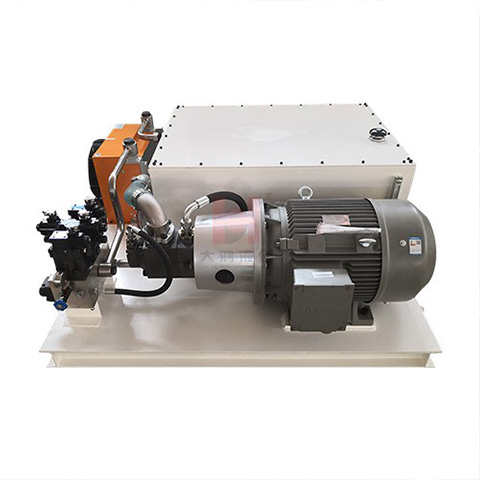
Hydraulic technology continues to evolve in response to operational demands in box handling applications. Through refined energy control, compact architecture, enhanced monitoring, and intelligent integration, modern hydraulic systems are contributing to more stable and efficient material handling processes.
For logistics operators and equipment manufacturers, adopting updated hydraulic solutions is no longer just a technical upgrade—it is a strategic decision that supports long-term performance and operational consistency.
RELATED NEWS
2026-03-31
Why Is Predictive Maintenance Gaining Traction for Hydraulic Systems?
Predictive maintenance is rapidly gaining traction in the management of hydraulic systems due to its ability to reduce unplanned downtime, extend equipment life, and optimize operational efficiency. Hydraulic systems, which rely on pressuri···
2026-03-31
How to Improve the Efficiency of a Hydraulic System?
Improving the efficiency of a hydraulic system is essential for reducing energy consumption, lowering operational costs, and extending the lifespan of equipment. Hydraulic systems are widely used in industries like manufacturing, constructi···
2026-03-24
Why Is Heat Resistance Critical in Metallurgical Electric Furnace Hydraulic Cylinders?
Heat resistance is a critical property for hydraulic cylinders used in metallurgical electric furnaces. These cylinders are key components in controlling furnace doors, tilting mechanisms, and other heavy operations, often operating in envi···
2026-03-24
How Does a Metallurgical Electric Furnace Hydraulic Cylinder Handle High Heat?
In metallurgical processes, electric furnaces operate at extremely high temperatures, often exceeding 1,500°C. Hydraulic cylinders used in these furnaces play a critical role in controlling doors, tilting mechanisms, or other moving parts,···
2026-03-17
How Do Hydraulic Cylinders Improve Safety in Railway Equipment Operations?
Hydraulic cylinders play a crucial role in enhancing safety in railway equipment operations. These devices convert hydraulic energy into linear mechanical force, enabling precise and reliable movement of heavy railway machinery, such as tra···
2026-03-17
How to Maintain Hydraulic Cylinders for Railway Equipment?
Hydraulic cylinders are critical components in railway equipment, enabling smooth movement and heavy lifting in applications such as track maintenance machines, train doors, and suspension systems. Proper maintenance ensures safety, extends···

GET YOUR FREE QUOTE
We will contact you within 24 hours. ( WhatsApp/facebook:13665121168)