Welcome to WUXI DAHONG HYDRAULIC PNEUMENT CO.,LTD
WhatsApp: 13665121168 Email: shaominjiao@wxdahong.com


What Are the Latest Trends in Hydraulic System Design for Paper Machines?
Release Time :
2026-02-17
Hydraulic systems play a critical role in modern paper manufacturing by providing stable force transmission, precise motion control, and reliable power delivery. In high-speed production environments, where continuous operation and consistent product quality are required, hydraulic technology supports multiple stages of the papermaking process.
1. Accurate Control of Pressing and Forming Sections
During the forming and pressing stages, paper sheets must pass through rollers under controlled pressure. Hydraulic cylinders regulate the nip pressure between rolls with high precision. This ensures uniform moisture removal and consistent sheet thickness. Stable pressure control reduces sheet breaks and minimizes downtime, which directly improves overall equipment efficiency.
In addition, hydraulic loading systems allow operators to adjust pressure parameters based on paper grade and machine speed. This flexibility supports different production requirements without extensive mechanical modifications.
2. Enhanced Stability in High-Speed Operations
Modern paper machines operate at high linear speeds. Mechanical systems alone may not provide the required responsiveness under dynamic load conditions. Hydraulic systems deliver high force density and smooth actuation, enabling rapid response to load fluctuations.
For example, hydraulic tension control devices maintain proper web tension across drying and winding sections. By preventing slack or excessive tension, they help reduce defects such as wrinkles or edge damage. As a result, production stability improves and material waste is reduced.
3. Efficient Power Transmission
Hydraulic systems transmit power through pressurized fluid, allowing compact system design while delivering substantial force. Compared with purely mechanical drive systems, hydraulic units can centralize power generation and distribute it to multiple actuators.
This configuration simplifies machine layout and reduces mechanical wear caused by complex gear trains or linkage systems. Maintenance intervals can be optimized, contributing to longer service life of critical components.
4. Improved Automation and Process Integration
Hydraulic systems are often integrated with PLC and sensor-based control systems. Pressure sensors, proportional valves, and servo-hydraulic components enable real-time monitoring and adjustment.
In calendering and coating processes, hydraulic actuators ensure precise roll gap control. This supports consistent surface smoothness and coating uniformity. By integrating hydraulic control with digital automation systems, manufacturers can achieve higher repeatability and improved process control.
5. Reduced Downtime Through Reliable Design
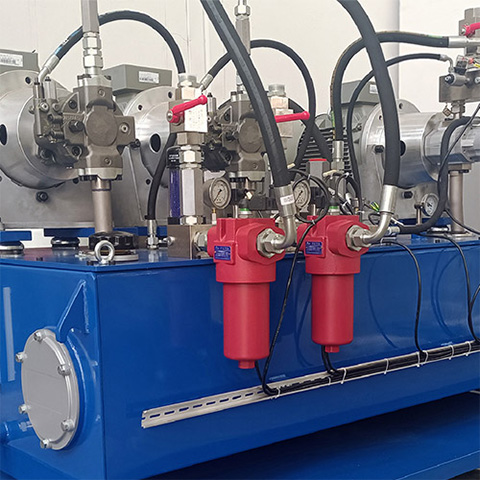
Paper mills operate continuously, and unplanned stoppages can significantly affect output. Hydraulic components are designed for heavy-duty cycles and can handle shock loads effectively. Proper filtration and system maintenance help maintain stable fluid quality, reducing the likelihood of system failure.
With predictive maintenance strategies, hydraulic system performance data can be monitored to detect early signs of wear or pressure anomalies. This approach supports planned maintenance rather than reactive repairs.
Conclusion
Hydraulic systems enhance efficiency in paper manufacturing by delivering precise pressure control, stable high-speed operation, effective power transmission, and seamless integration with automation systems. Through improved process consistency and reduced downtime, hydraulic technology supports higher productivity and consistent product quality in modern paper mills.
RELATED NEWS
2026-03-31
Why Is Predictive Maintenance Gaining Traction for Hydraulic Systems?
Predictive maintenance is rapidly gaining traction in the management of hydraulic systems due to its ability to reduce unplanned downtime, extend equipment life, and optimize operational efficiency. Hydraulic systems, which rely on pressuri···
2026-03-31
How to Improve the Efficiency of a Hydraulic System?
Improving the efficiency of a hydraulic system is essential for reducing energy consumption, lowering operational costs, and extending the lifespan of equipment. Hydraulic systems are widely used in industries like manufacturing, constructi···
2026-03-24
Why Is Heat Resistance Critical in Metallurgical Electric Furnace Hydraulic Cylinders?
Heat resistance is a critical property for hydraulic cylinders used in metallurgical electric furnaces. These cylinders are key components in controlling furnace doors, tilting mechanisms, and other heavy operations, often operating in envi···
2026-03-24
How Does a Metallurgical Electric Furnace Hydraulic Cylinder Handle High Heat?
In metallurgical processes, electric furnaces operate at extremely high temperatures, often exceeding 1,500°C. Hydraulic cylinders used in these furnaces play a critical role in controlling doors, tilting mechanisms, or other moving parts,···
2026-03-17
How Do Hydraulic Cylinders Improve Safety in Railway Equipment Operations?
Hydraulic cylinders play a crucial role in enhancing safety in railway equipment operations. These devices convert hydraulic energy into linear mechanical force, enabling precise and reliable movement of heavy railway machinery, such as tra···
2026-03-17
How to Maintain Hydraulic Cylinders for Railway Equipment?
Hydraulic cylinders are critical components in railway equipment, enabling smooth movement and heavy lifting in applications such as track maintenance machines, train doors, and suspension systems. Proper maintenance ensures safety, extends···

GET YOUR FREE QUOTE
We will contact you within 24 hours. ( WhatsApp/facebook:13665121168)