Welcome to WUXI DAHONG HYDRAULIC PNEUMENT CO.,LTD
WhatsApp: 13665121168 Email: shaominjiao@wxdahong.com


How Can Custom Hydraulic Systems Improve Operational Efficiency?
Release Time :
2026-01-01
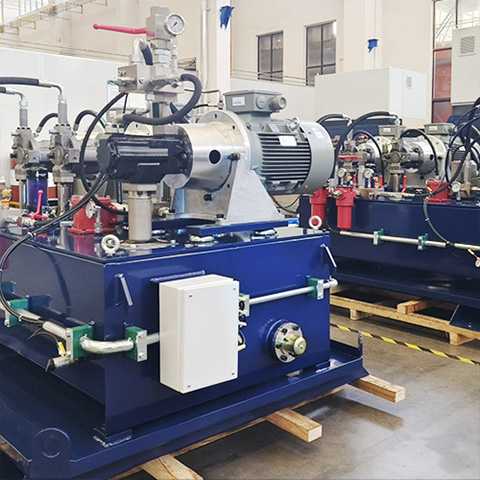
Hydraulic systems are widely used in construction machinery, industrial equipment, mining, agriculture, and many other fields. While standard hydraulic systems can meet general requirements, they are not always the most efficient solution for specific applications. This is where custom hydraulic systems come into play. By tailoring the system to real operating conditions, companies can significantly improve operational efficiency, reliability, and overall performance.
So how exactly do custom hydraulic systems make a difference? Let’s take a closer look.
1. Matching the System to Real Working Conditions
One of the biggest advantages of custom hydraulic systems is that they are designed around actual operating needs, not assumptions.
Standard systems are built to cover a wide range of applications, which often leads to compromises:
Oversized components
Unnecessary energy consumption
Inefficient control response
A custom system, on the other hand, is engineered based on:
Load requirements
Working pressure and flow
Duty cycles
Environmental conditions
In simple terms, the system does what it needs to do—no more, no less. This avoids wasted power and helps the machine work smarter, not harder.
2. Improved Energy Efficiency and Lower Power Loss
Energy loss is a common issue in poorly matched hydraulic systems. Custom hydraulic designs can reduce losses by:
Selecting pumps with the right displacement and efficiency range
Optimizing valve configuration and flow paths
Minimizing pressure drops in pipelines
These improvements lead to smoother operation and reduced heat generation. Less heat means less energy wasted, and also less stress on hydraulic oil and components. It’s one of those behind-the-scenes improvements that quietly saves money over time.
3. Faster and More Accurate System Response
Operational efficiency is not just about power—it’s also about control.
Custom hydraulic systems can integrate:
Proportional or servo valves
Load-sensing or pressure-compensated circuits
Application-specific control logic
This allows the system to respond more quickly and accurately to operator input. Whether it’s lifting, drilling, clamping, or steering, precise control reduces cycle time and improves productivity. And honestly, operators usually notice this right away—it just feels better to use.
4. Better Component Integration and System Layout
A custom hydraulic system is designed as a whole, not as a collection of separate parts. This improves efficiency by:
Reducing unnecessary hoses and fittings
Improving space utilization
Simplifying system structure
A cleaner layout means fewer potential leakage points and easier troubleshooting. When everything is arranged logically, maintenance becomes less time-consuming, which indirectly boosts operational efficiency as well.
5. Increased Reliability and Reduced Downtime
Efficiency drops sharply when equipment is down for repairs. Custom hydraulic systems improve reliability by:
Selecting components rated for actual loads instead of theoretical limits
Designing circuits that reduce shock and pressure spikes
Improving oil cleanliness management
By reducing unexpected failures, equipment stays in service longer and maintenance schedules become more predictable. In real-world operations, fewer surprises usually mean better efficiency.
6. Adaptability for Future Upgrades or Process Changes
Another often overlooked benefit is flexibility. Custom hydraulic systems can be designed with future expansion or modification in mind, such as:
Reserved control ports
Modular valve blocks
Upgrade-ready control interfaces
This makes it easier to adapt the equipment when production requirements change. Instead of replacing the entire system, targeted adjustments can be made—saving both time and cost.
7. Optimized Maintenance and Operating Costs
While custom systems are not about unrealistic cost savings, they do help optimize long-term operating expenses by:
Reducing oil degradation due to excess heat
Extending component service life
Simplifying maintenance procedures
Over time, these practical benefits add up. The system runs more efficiently, maintenance becomes more manageable, and overall operating costs stay under control.
Conclusion
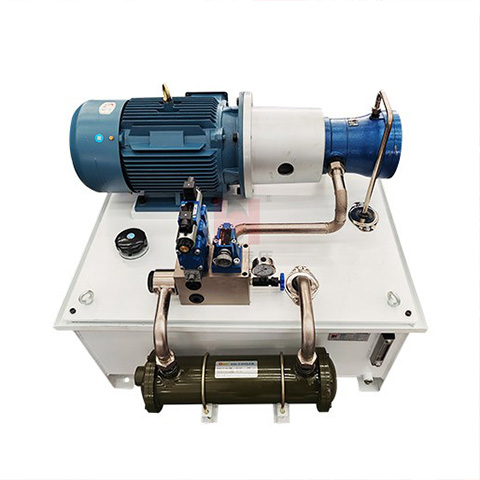
Custom hydraulic systems improve operational efficiency by aligning system design with real-world requirements. Through better energy use, faster response, improved reliability, and smarter integration, they help equipment perform more consistently and productively.
It’s not about chasing perfection or making bold claims—it’s about practical engineering choices that fit the application. When a hydraulic system is designed to match the job, efficiency tends to follow naturally.
RELATED NEWS
2026-03-31
Why Is Predictive Maintenance Gaining Traction for Hydraulic Systems?
Predictive maintenance is rapidly gaining traction in the management of hydraulic systems due to its ability to reduce unplanned downtime, extend equipment life, and optimize operational efficiency. Hydraulic systems, which rely on pressuri···
2026-03-31
How to Improve the Efficiency of a Hydraulic System?
Improving the efficiency of a hydraulic system is essential for reducing energy consumption, lowering operational costs, and extending the lifespan of equipment. Hydraulic systems are widely used in industries like manufacturing, constructi···
2026-03-24
Why Is Heat Resistance Critical in Metallurgical Electric Furnace Hydraulic Cylinders?
Heat resistance is a critical property for hydraulic cylinders used in metallurgical electric furnaces. These cylinders are key components in controlling furnace doors, tilting mechanisms, and other heavy operations, often operating in envi···
2026-03-24
How Does a Metallurgical Electric Furnace Hydraulic Cylinder Handle High Heat?
In metallurgical processes, electric furnaces operate at extremely high temperatures, often exceeding 1,500°C. Hydraulic cylinders used in these furnaces play a critical role in controlling doors, tilting mechanisms, or other moving parts,···
2026-03-17
How Do Hydraulic Cylinders Improve Safety in Railway Equipment Operations?
Hydraulic cylinders play a crucial role in enhancing safety in railway equipment operations. These devices convert hydraulic energy into linear mechanical force, enabling precise and reliable movement of heavy railway machinery, such as tra···
2026-03-17
How to Maintain Hydraulic Cylinders for Railway Equipment?
Hydraulic cylinders are critical components in railway equipment, enabling smooth movement and heavy lifting in applications such as track maintenance machines, train doors, and suspension systems. Proper maintenance ensures safety, extends···

GET YOUR FREE QUOTE
We will contact you within 24 hours. ( WhatsApp/facebook:13665121168)