Welcome to WUXI DAHONG HYDRAULIC PNEUMENT CO.,LTD
WhatsApp: 13665121168 Email: shaominjiao@wxdahong.com


How Is Reliability Achieved in the Hydraulic Cylinder of Drilling Jumbo?
Release Time :
2025-12-25
A drilling jumbo is a key piece of equipment in underground mining and tunneling, and its hydraulic system plays a decisive role in overall performance. Among all hydraulic components, the hydraulic cylinder is especially critical. It directly controls drilling feed, boom positioning, and stability during operation. If the cylinder fails, the whole machine can stop working. So, how is reliability actually achieved in the hydraulic cylinder of a drilling jumbo? Let’s break it down in a clear and practical way.
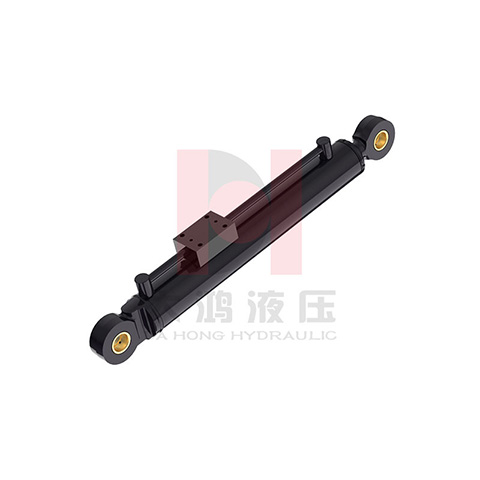
1. Material Selection: The Foundation of Reliability
Reliability starts with materials. Hydraulic cylinders used in drilling jumbos operate under high pressure, heavy loads, vibration, and harsh environments such as dust, moisture, and rock debris.
Cylinder barrel: Usually made from high-strength seamless steel tubes with precise honing to ensure a smooth inner surface.
Piston rod: Commonly manufactured from alloy steel with chrome plating or other surface treatments to improve wear resistance and corrosion protection.
In simple terms, if the steel quality is poor, no amount of design can save the cylinder in the long run. Good materials mean fewer surprises underground.
2. Precision Manufacturing and Machining Quality
Even with good materials, poor machining can lead to early failure. Reliable drilling jumbo cylinders depend on tight dimensional tolerances and consistent surface finishes.
Key manufacturing aspects include:
Accurate cylinder bore roundness and straightness
High-quality piston rod surface roughness
Proper alignment between barrel, rod, and piston
This precision reduces internal leakage, uneven wear, and seal damage. Think of it like a well-fitted door: if it’s aligned properly, it opens smoothly and lasts longer.
3. Seal System Design: Preventing Leaks and Contamination
Seal failure is one of the most common reasons for hydraulic cylinder problems. For drilling jumbos, the seal system must handle high pressure, frequent movement, and external contamination.
Reliable cylinders typically use:
Multi-stage sealing systems
Wear-resistant polyurethane or composite seals
Dust and wiper seals to block rock dust and mud
A good seal design doesn’t just stop oil from leaking out; it also prevents dirt from getting in. And honestly, keeping dirt out is half the battle underground.
4. Structural Design for Heavy-Duty Operation
Drilling jumbo cylinders are not standard industrial cylinders. Their design must consider:
Side loads during drilling
Shock loads from rock contact
Repeated high-frequency movements
To improve reliability, engineers optimize:
Wall thickness of the cylinder barrel
Piston and rod diameter ratios
Cushioning structures at stroke ends
These design choices reduce stress concentration and fatigue cracking, helping the cylinder survive long-term heavy-duty use.
5. Surface Treatment and Corrosion Protection
Underground environments can be humid and aggressive. Surface treatment is therefore essential.
Common measures include:
Hard chrome plating or alternative coatings on piston rods
Anti-corrosion paint or coatings on external surfaces
These treatments protect against rust, scratches, and premature wear. It may not look fancy, but it keeps the cylinder working day after day.
6. Quality Control and Testing
Before a hydraulic cylinder is installed on a drilling jumbo, it usually goes through several tests:
Pressure testing
Leakage testing
Stroke and function testing
These tests verify that the cylinder meets design requirements and can operate safely under working pressure. Skipping this step is risky, and reputable manufacturers don’t cut corners here.
7. Proper Installation and Maintenance in the Field
Even the best-designed cylinder can fail if installed or maintained incorrectly. Reliability also depends on:
Correct alignment during installation
Clean hydraulic oil
Regular inspection of seals and rod surfaces
In plain language: treat the cylinder well, and it will return the favor.
Conclusion
Reliability in the hydraulic cylinder of a drilling jumbo is not achieved by a single factor. It is the result of high-quality materials, precise manufacturing, robust seal design, sound structural engineering, effective surface treatment, strict testing, and proper maintenance.
When all these elements work together, the hydraulic cylinder can operate stably under tough underground conditions, ensuring efficient and safe drilling operations. It’s not magic—just solid engineering done right.
RELATED NEWS
2026-03-31
Why Is Predictive Maintenance Gaining Traction for Hydraulic Systems?
Predictive maintenance is rapidly gaining traction in the management of hydraulic systems due to its ability to reduce unplanned downtime, extend equipment life, and optimize operational efficiency. Hydraulic systems, which rely on pressuri···
2026-03-31
How to Improve the Efficiency of a Hydraulic System?
Improving the efficiency of a hydraulic system is essential for reducing energy consumption, lowering operational costs, and extending the lifespan of equipment. Hydraulic systems are widely used in industries like manufacturing, constructi···
2026-03-24
Why Is Heat Resistance Critical in Metallurgical Electric Furnace Hydraulic Cylinders?
Heat resistance is a critical property for hydraulic cylinders used in metallurgical electric furnaces. These cylinders are key components in controlling furnace doors, tilting mechanisms, and other heavy operations, often operating in envi···
2026-03-24
How Does a Metallurgical Electric Furnace Hydraulic Cylinder Handle High Heat?
In metallurgical processes, electric furnaces operate at extremely high temperatures, often exceeding 1,500°C. Hydraulic cylinders used in these furnaces play a critical role in controlling doors, tilting mechanisms, or other moving parts,···
2026-03-17
How Do Hydraulic Cylinders Improve Safety in Railway Equipment Operations?
Hydraulic cylinders play a crucial role in enhancing safety in railway equipment operations. These devices convert hydraulic energy into linear mechanical force, enabling precise and reliable movement of heavy railway machinery, such as tra···
2026-03-17
How to Maintain Hydraulic Cylinders for Railway Equipment?
Hydraulic cylinders are critical components in railway equipment, enabling smooth movement and heavy lifting in applications such as track maintenance machines, train doors, and suspension systems. Proper maintenance ensures safety, extends···

GET YOUR FREE QUOTE
We will contact you within 24 hours. ( WhatsApp/facebook:13665121168)