Welcome to WUXI DAHONG HYDRAULIC PNEUMENT CO.,LTD
WhatsApp: 13665121168 Email: shaominjiao@wxdahong.com


How Reliable Are Standard Welded Hydraulic Cylinders?
Release Time :
2025-12-18
Standard welded hydraulic cylinders are widely used in construction equipment, agricultural machinery, material handling systems, and industrial applications. Their reputation for strength and compact design makes them a popular choice, but how reliable are they in real-world operation? The answer depends on design quality, manufacturing standards, operating conditions, and maintenance practices.
What Is a Standard Welded Hydraulic Cylinder?
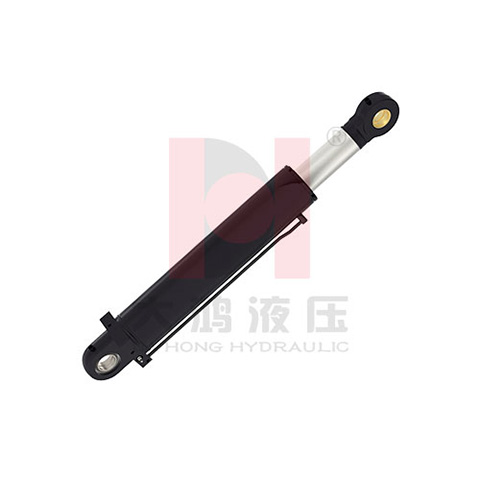
A welded hydraulic cylinder is a type of linear actuator in which the barrel, end caps, and ports are welded together instead of being held by tie rods. This structure results in a more compact and rigid design compared to tie-rod cylinders.
Standard welded cylinders typically include:
A honed steel tube
A welded base and gland
A chrome-plated piston rod
Seals designed for hydraulic pressure and contamination control
They are often used where space is limited or where higher structural strength is required.
Key Factors That Affect Reliability
1. Structural Strength and Design
One of the main advantages of welded hydraulic cylinders is their solid construction. The welded joints provide excellent resistance to bending and external loads, which improves reliability in heavy-duty environments.
However, because the cylinder is not easily disassembled, any internal damage usually requires professional repair or complete replacement. In other words, they are strong—but not very forgiving if something goes wrong.
2. Manufacturing Quality
Reliability is closely tied to how the cylinder is manufactured. Factors such as:
Welding consistency
Tube straightness
Rod surface finish
Seal groove accuracy
all directly influence service life. Cylinders produced under recognized quality control systems (such as ISO standards) generally perform more consistently over time.
A poorly welded seam or incorrect seal installation won’t fail immediately, but it may shorten the cylinder’s lifespan. These problems often show up later, which is why manufacturing quality really matters.
3. Seal Performance
Seals are one of the most common wear components in any hydraulic cylinder. In standard welded cylinders, seal reliability depends on:
Seal material selection
Surface finish of the rod
Operating temperature and pressure
Contamination levels in the hydraulic fluid
Under normal conditions, seals can last a long time. But if the system runs dirty oil or operates beyond its rated pressure, seal failure can happen sooner than expected. To be honest, seals usually fail before the steel parts do.
4. Operating Conditions
Standard welded hydraulic cylinders are reliable when used within their design limits. Problems often occur when:
Side loads exceed design assumptions
Pressure spikes are frequent
Shock loads are not properly controlled
In harsh environments such as mining or demolition, additional protection (like rod boots or cushioning) may be necessary. The cylinder itself is reliable—but it still follows the rules of physics.
Maintenance and Service Life
Compared to tie-rod cylinders, welded cylinders require less routine maintenance because there are no external fasteners to re-torque. However, when internal service is needed, repairs are more complex.
Typical service life can range from several years to well over a decade, depending on usage. With proper lubrication, clean hydraulic oil, and reasonable operating conditions, standard welded hydraulic cylinders are generally very dependable.
In simple terms: treat them well, and they’ll do their job quietly in the background.
Common Failure Modes (and What They Mean)
Even reliable components fail eventually. Common issues include:
Seal wear leading to leakage
Rod scoring from contamination
Fatigue cracks from repeated overload
These failures are usually the result of operating conditions rather than inherent design flaws. Most standard welded cylinders do exactly what they are designed to do—nothing more, nothing less.
Final Assessment: Are They Reliable?
Yes, standard welded hydraulic cylinders are considered reliable for most industrial and mobile equipment applications. Their strength, compact size, and proven design make them a solid choice when properly specified and manufactured.
That said, reliability is not automatic. It depends on realistic expectations, correct application, and basic system maintenance. They are tough components—but they’re not indestructible.
If you choose the right cylinder for the job and operate it sensibly, it will likely perform reliably for many years without drawing much attention—which, honestly, is exactly what good hydraulic equipment should do.
RELATED NEWS
2026-03-31
Why Is Predictive Maintenance Gaining Traction for Hydraulic Systems?
Predictive maintenance is rapidly gaining traction in the management of hydraulic systems due to its ability to reduce unplanned downtime, extend equipment life, and optimize operational efficiency. Hydraulic systems, which rely on pressuri···
2026-03-31
How to Improve the Efficiency of a Hydraulic System?
Improving the efficiency of a hydraulic system is essential for reducing energy consumption, lowering operational costs, and extending the lifespan of equipment. Hydraulic systems are widely used in industries like manufacturing, constructi···
2026-03-24
Why Is Heat Resistance Critical in Metallurgical Electric Furnace Hydraulic Cylinders?
Heat resistance is a critical property for hydraulic cylinders used in metallurgical electric furnaces. These cylinders are key components in controlling furnace doors, tilting mechanisms, and other heavy operations, often operating in envi···
2026-03-24
How Does a Metallurgical Electric Furnace Hydraulic Cylinder Handle High Heat?
In metallurgical processes, electric furnaces operate at extremely high temperatures, often exceeding 1,500°C. Hydraulic cylinders used in these furnaces play a critical role in controlling doors, tilting mechanisms, or other moving parts,···
2026-03-17
How Do Hydraulic Cylinders Improve Safety in Railway Equipment Operations?
Hydraulic cylinders play a crucial role in enhancing safety in railway equipment operations. These devices convert hydraulic energy into linear mechanical force, enabling precise and reliable movement of heavy railway machinery, such as tra···
2026-03-17
How to Maintain Hydraulic Cylinders for Railway Equipment?
Hydraulic cylinders are critical components in railway equipment, enabling smooth movement and heavy lifting in applications such as track maintenance machines, train doors, and suspension systems. Proper maintenance ensures safety, extends···

GET YOUR FREE QUOTE
We will contact you within 24 hours. ( WhatsApp/facebook:13665121168)