Welcome to WUXI DAHONG HYDRAULIC PNEUMENT CO.,LTD
WhatsApp: 13665121168 Email: shaominjiao@wxdahong.com


What Makes Our Hydraulic Systems Suitable for Heavy-Duty Use?
Release Time :
2025-12-11
Hydraulic systems are widely used in industries where strength, reliability, and control are critical. From construction machinery and mining equipment to industrial manufacturing and material handling, heavy-duty applications place high demands on hydraulic components. But what exactly makes a hydraulic system suitable for this kind of work?
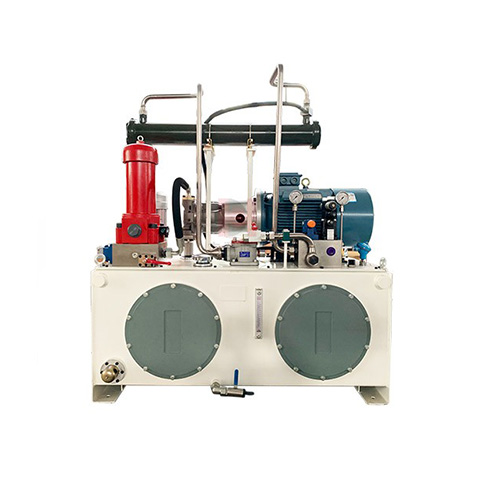
1. Designed to Handle High Loads Consistently
Heavy-duty operations often involve continuous lifting, pushing, or pressing under high pressure. Hydraulic systems intended for these conditions are engineered to operate within stable pressure ranges while maintaining smooth motion.
Key factors include:
Properly rated pumps, cylinders, and valves
Materials selected for strength and fatigue resistance
System layouts that minimize unnecessary pressure loss
In simple terms, the system is built to do hard work repeatedly, not just once in a while.
2. Durable Materials for Demanding Environments
Heavy-duty equipment is rarely used in clean or mild conditions. Dust, vibration, temperature changes, and long operating hours are common. For this reason, hydraulic systems rely on components made from materials that can withstand wear and environmental stress.
Examples include:
Hardened steel or alloy components for critical parts
Seals designed to resist oil degradation and temperature variation
Protective coatings to reduce corrosion risk
These choices don’t make the system indestructible, but they help extend service life under real working conditions.
3. Stable Performance Under Continuous Operation
Unlike light-duty systems that run intermittently, heavy-duty hydraulic systems are often expected to operate for long periods. Stability becomes more important than peak performance.
A well-designed system focuses on:
Controlled heat generation and dissipation
Reliable oil flow under varying loads
Predictable response from valves and actuators
In other words, it’s not about being flashy—it’s about doing the same job, the same way, hour after hour.
4. Ease of Maintenance and Inspection
In industrial and construction settings, downtime matters. Hydraulic systems suited for heavy-duty use are typically designed with maintenance in mind.
This may include:
Standardized components that are easier to replace
Clear access points for inspection and servicing
Compatibility with commonly available hydraulic fluids
From a practical standpoint, a system that can be maintained efficiently is often more valuable than one that is technically complex but hard to service.
5. Adaptability to Different Applications
Heavy-duty does not mean one-size-fits-all. Hydraulic systems are often customized or configured to match specific equipment and operating requirements.
This adaptability can involve:
Adjustable pressure and flow settings
Modular system design
Compatibility with different control methods
Simply put, the system can be tuned to match the job instead of forcing the job to match the system.
Conclusion
Hydraulic systems suitable for heavy-duty use are not defined by marketing claims, but by solid engineering, material selection, and practical design choices. Their value lies in reliability, durability, and consistent performance under demanding conditions.
At the end of the day, a good heavy-duty hydraulic system is one that works when it’s supposed to, handles stress without drama, and doesn’t create unnecessary problems for operators or maintenance teams. That’s not a bold promise—it’s just good engineering.
RELATED NEWS
2026-03-31
Why Is Predictive Maintenance Gaining Traction for Hydraulic Systems?
Predictive maintenance is rapidly gaining traction in the management of hydraulic systems due to its ability to reduce unplanned downtime, extend equipment life, and optimize operational efficiency. Hydraulic systems, which rely on pressuri···
2026-03-31
How to Improve the Efficiency of a Hydraulic System?
Improving the efficiency of a hydraulic system is essential for reducing energy consumption, lowering operational costs, and extending the lifespan of equipment. Hydraulic systems are widely used in industries like manufacturing, constructi···
2026-03-24
Why Is Heat Resistance Critical in Metallurgical Electric Furnace Hydraulic Cylinders?
Heat resistance is a critical property for hydraulic cylinders used in metallurgical electric furnaces. These cylinders are key components in controlling furnace doors, tilting mechanisms, and other heavy operations, often operating in envi···
2026-03-24
How Does a Metallurgical Electric Furnace Hydraulic Cylinder Handle High Heat?
In metallurgical processes, electric furnaces operate at extremely high temperatures, often exceeding 1,500°C. Hydraulic cylinders used in these furnaces play a critical role in controlling doors, tilting mechanisms, or other moving parts,···
2026-03-17
How Do Hydraulic Cylinders Improve Safety in Railway Equipment Operations?
Hydraulic cylinders play a crucial role in enhancing safety in railway equipment operations. These devices convert hydraulic energy into linear mechanical force, enabling precise and reliable movement of heavy railway machinery, such as tra···
2026-03-17
How to Maintain Hydraulic Cylinders for Railway Equipment?
Hydraulic cylinders are critical components in railway equipment, enabling smooth movement and heavy lifting in applications such as track maintenance machines, train doors, and suspension systems. Proper maintenance ensures safety, extends···

GET YOUR FREE QUOTE
We will contact you within 24 hours. ( WhatsApp/facebook:13665121168)