Welcome to WUXI DAHONG HYDRAULIC PNEUMENT CO.,LTD
WhatsApp: 13665121168 Email: shaominjiao@wxdahong.com


What Role Do Hydraulic Systems Play in Automation?
Release Time :
2026-01-01
Automation has become a key driver of efficiency and consistency in modern industry. From manufacturing and material handling to construction and energy sectors, automated systems are designed to reduce manual intervention while improving accuracy and productivity. In this context, hydraulic systems continue to play an important and sometimes underestimated role.
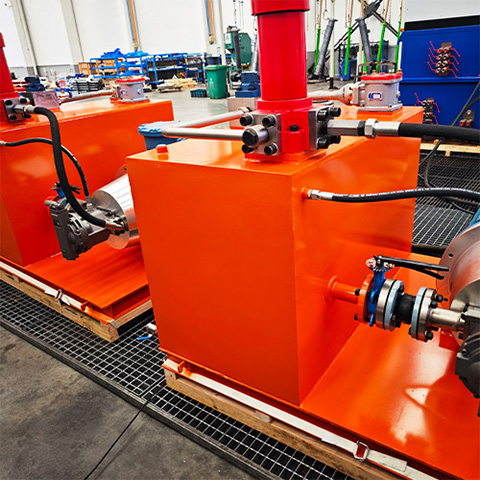
Although electric and pneumatic systems are widely used, hydraulics remain essential where high force, precise control, and durability are required. So, what exactly do hydraulic systems contribute to automation? Let’s look at it in a practical and realistic way.
1. Providing High Power Density for Automated Motion
One of the main strengths of hydraulic systems is their high power density. Compared with electric or pneumatic solutions, hydraulics can generate much higher force from relatively compact components.
In automated equipment, this makes hydraulic systems suitable for:
Pressing and forming operations
Lifting and positioning heavy loads
Clamping and holding workpieces securely
In simple terms, when automation needs serious muscle in a limited space, hydraulics are often the logical choice.
2. Enabling Precise and Repeatable Control
Modern automation is not just about movement; it’s about controlled and repeatable movement. With advancements in hydraulic technology, systems can now achieve high levels of accuracy through:
Proportional and servo valves
Closed-loop control with sensors
Integration with PLC and industrial control systems
This allows hydraulic actuators to perform smooth, controlled motions that are repeatable over long operating cycles. The result is stable process quality—something automation depends on heavily.
3. Supporting Automation in Harsh Environments
Automated systems are often deployed in environments that are far from ideal, such as:
High temperatures
Dusty or wet conditions
Outdoor or underground locations
Hydraulic systems are well suited to these conditions due to their robust construction and tolerance to environmental stress. While they still require proper maintenance, hydraulics generally handle tough conditions better than many purely electric solutions. Simply put, they are built to take a beating and keep going.
4. Integrating with Electronic Control and Smart Systems
Hydraulics are no longer “standalone” mechanical systems. In automation, they are commonly integrated with electronic controls to form electro-hydraulic systems.
Typical integration includes:
Sensors for position, pressure, and flow
Electronic controllers for real-time adjustments
Communication with centralized automation platforms
This combination allows hydraulic systems to respond dynamically to process changes, making them an active part of intelligent automation rather than a passive power source.
5. Improving Safety in Automated Operations
Safety is a core concern in automation, especially where high forces are involved. Hydraulic systems can contribute to safer automated processes by:
Providing stable load holding without continuous energy input
Enabling controlled emergency stops
Supporting fail-safe designs through pressure control and locking mechanisms
These features help reduce the risk of sudden movements or uncontrolled load drops, which is critical in automated environments.
6. Enhancing Efficiency in Specific Automated Applications
While hydraulic systems are not the best solution for every automated task, they excel in applications where:
Force requirements are high
Motion needs to be smooth and controlled
Equipment operates in continuous or heavy-duty cycles
By choosing hydraulics where they make sense—and not forcing them where they don’t—automation designers can achieve a balanced and efficient system. This kind of flexibility is often what makes an automation project successful.
7. Adapting to Evolving Automation Needs
Hydraulic systems also offer a degree of adaptability. With proper design, they can be upgraded through:
Improved control valves
Digital sensors
More efficient pumps or power units
This allows existing automated equipment to evolve alongside new control technologies without complete system replacement. It’s a practical approach that many industries appreciate.
Conclusion
Hydraulic systems play a vital role in automation by delivering high force, precise control, durability, and reliability where it matters most. Through integration with electronic controls and smart monitoring, hydraulics have adapted well to modern automated environments.
They are not a universal solution, but when applied thoughtfully, hydraulic systems remain a powerful and flexible tool in automation. In short, they quietly do the heavy work behind the scenes—and automation wouldn’t be the same without them.
RELATED NEWS
2026-03-31
Why Is Predictive Maintenance Gaining Traction for Hydraulic Systems?
Predictive maintenance is rapidly gaining traction in the management of hydraulic systems due to its ability to reduce unplanned downtime, extend equipment life, and optimize operational efficiency. Hydraulic systems, which rely on pressuri···
2026-03-31
How to Improve the Efficiency of a Hydraulic System?
Improving the efficiency of a hydraulic system is essential for reducing energy consumption, lowering operational costs, and extending the lifespan of equipment. Hydraulic systems are widely used in industries like manufacturing, constructi···
2026-03-24
Why Is Heat Resistance Critical in Metallurgical Electric Furnace Hydraulic Cylinders?
Heat resistance is a critical property for hydraulic cylinders used in metallurgical electric furnaces. These cylinders are key components in controlling furnace doors, tilting mechanisms, and other heavy operations, often operating in envi···
2026-03-24
How Does a Metallurgical Electric Furnace Hydraulic Cylinder Handle High Heat?
In metallurgical processes, electric furnaces operate at extremely high temperatures, often exceeding 1,500°C. Hydraulic cylinders used in these furnaces play a critical role in controlling doors, tilting mechanisms, or other moving parts,···
2026-03-17
How Do Hydraulic Cylinders Improve Safety in Railway Equipment Operations?
Hydraulic cylinders play a crucial role in enhancing safety in railway equipment operations. These devices convert hydraulic energy into linear mechanical force, enabling precise and reliable movement of heavy railway machinery, such as tra···
2026-03-17
How to Maintain Hydraulic Cylinders for Railway Equipment?
Hydraulic cylinders are critical components in railway equipment, enabling smooth movement and heavy lifting in applications such as track maintenance machines, train doors, and suspension systems. Proper maintenance ensures safety, extends···

GET YOUR FREE QUOTE
We will contact you within 24 hours. ( WhatsApp/facebook:13665121168)